Oscar Zhu · St. Louis

Native Mac apps.
Quantitative tools.

I study Mathematical Sciences and Financial Engineering at Washington University in St. Louis. I build focused software that stays local, explains its assumptions, and is honest about its limits.

01 / Selected work

Small products, built all the way through.

01

Quantitative finance · macOS 14+

ItoCanvas

An offline options laboratory that turns Black–Scholes–Merton formulas into a working, visual Mac app.

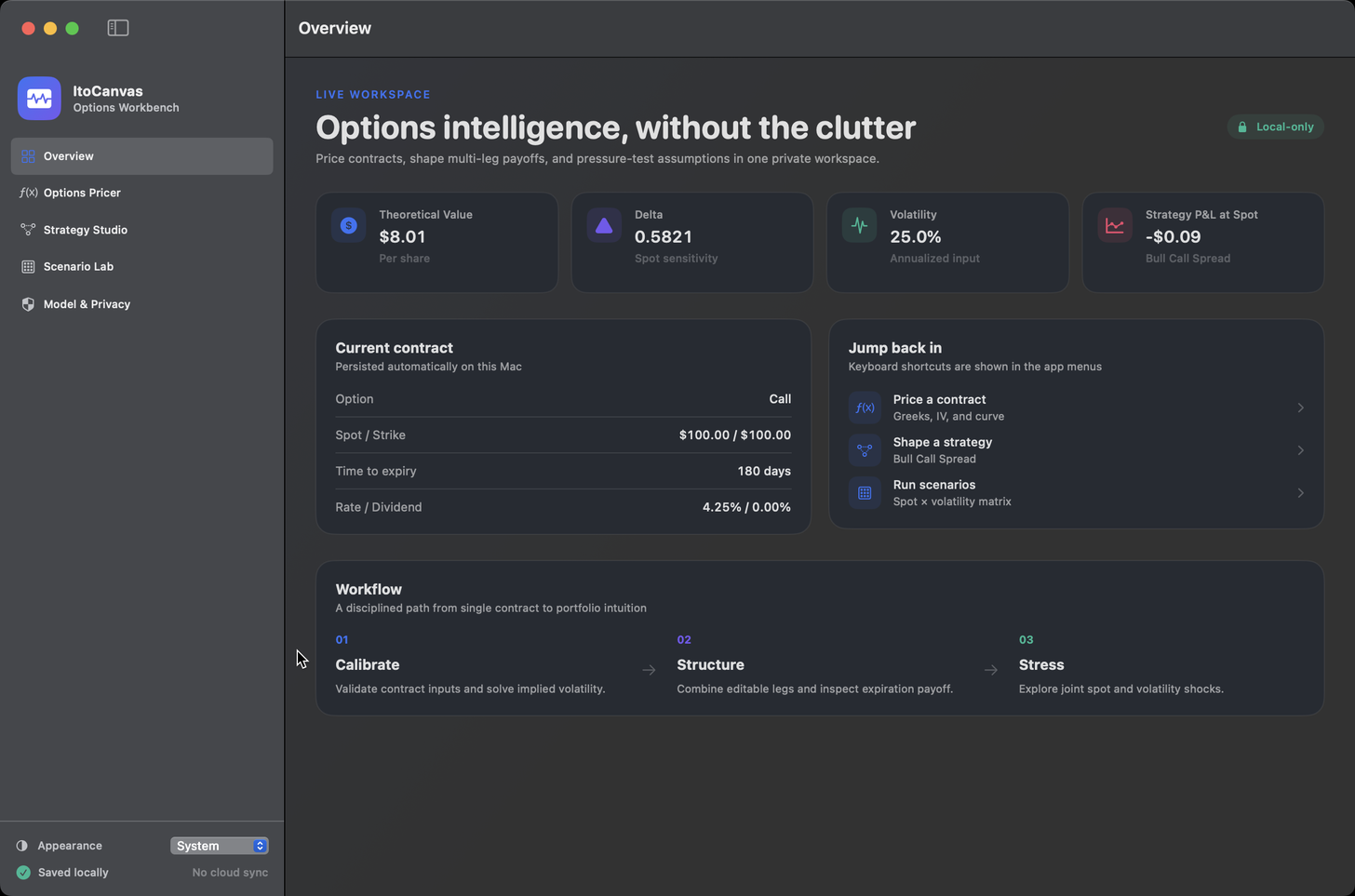
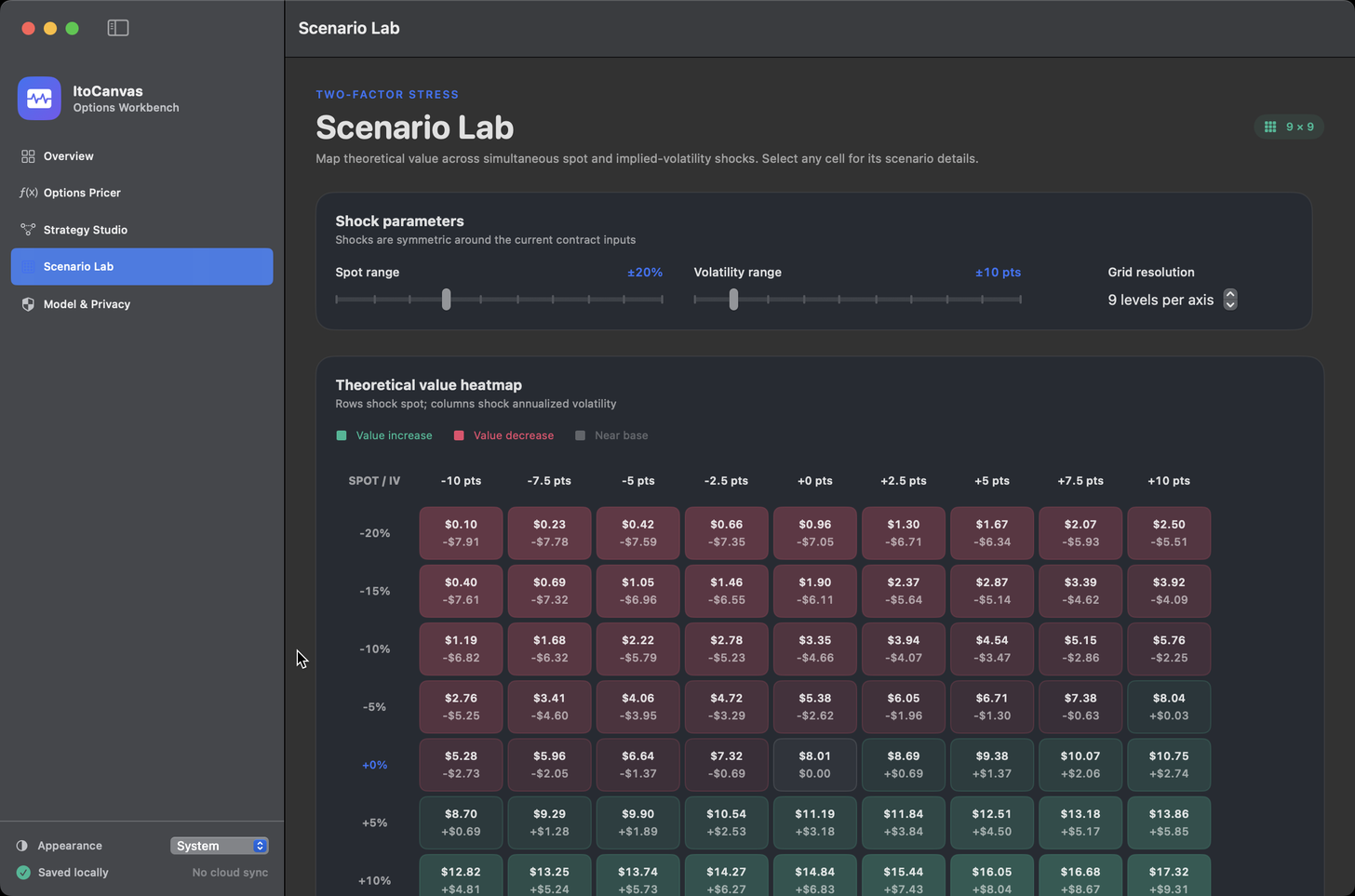
Price European options, inspect Greeks, solve implied volatility, shape multi-leg strategies, and stress spot and volatility together. The app stores work locally and does not require an account.
  • Swift
  • SwiftUI
  • Black–Scholes
  • Local-first
ItoCanvas Overview showing an options workspace, pricing metrics, and workflow
ItoCanvas Scenario Lab showing a spot and volatility heatmap
02

On-device translation · macOS 15+

DualTyper

A menu-bar translator for people who write between languages and want to keep the original sentence in view.

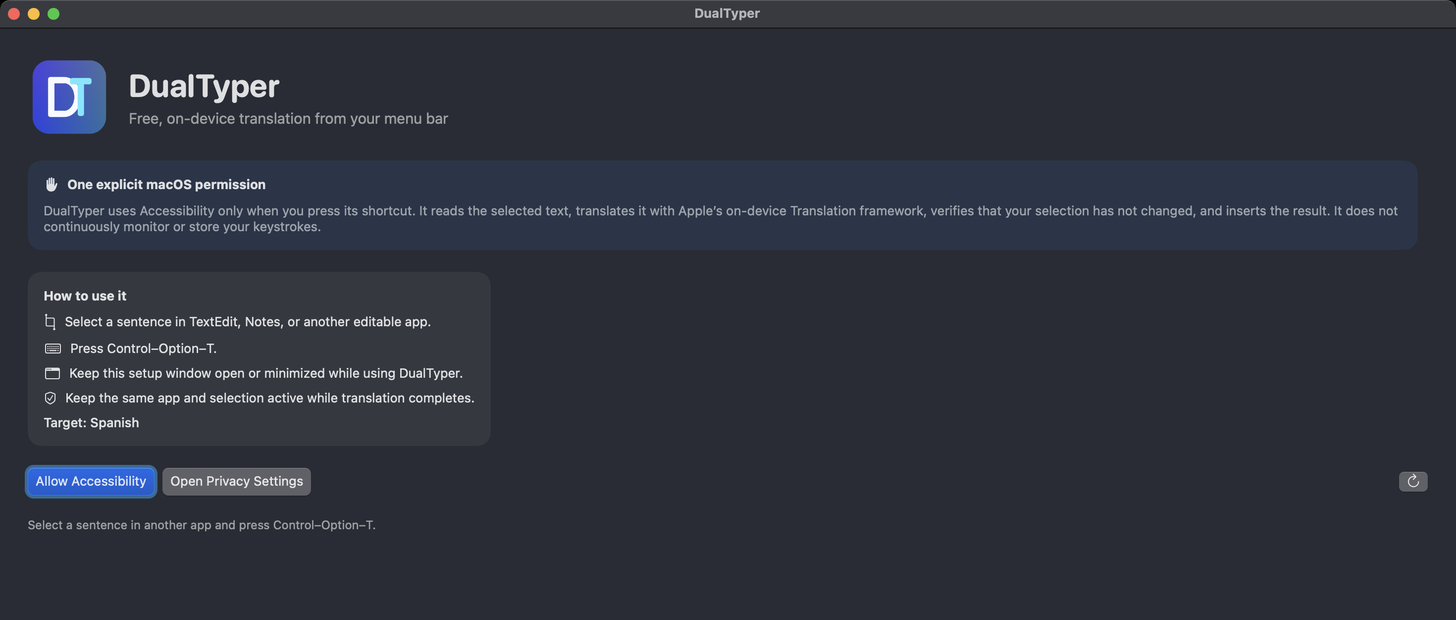
Select editable text, press Control–Option–T, and DualTyper inserts Apple’s on-device translation underneath. It rechecks the process, text, and selection range before editing and refuses secure fields.

  • Swift
  • SwiftUI
  • Accessibility
  • Apple Translation

The free build is ad-hoc signed and unnotarized, so each user must approve it in macOS Privacy & Security and grant Accessibility permission.

DualTyper setup window explaining its explicit Accessibility permission and keyboard shortcut

02 / ML reliability lab

Tools for catching silent failure.

01

numguard

Adversarial fixtures and high-precision references for numerical ML kernels. It makes a plausible-looking result answer to a stricter question: is it actually correct?

Explore releases

02

qdrift

An exact-oracle checker for affine INT8 quantization arithmetic, focused on round boundaries and cross-scale additions where small errors become model errors.

Explore releases

03

recallwatch

A segmented monitor for approximate-nearest-neighbor indexes that looks for tail-query recall collapse instead of hiding it inside one average score.

Explore releases

03 / About

Software, markets, and the decisions between them.

I’m interested in tools that make complex work easier to inspect, not easier to hide.

At Washington University in St. Louis, I study Mathematical Sciences and Financial Engineering, with expected graduation in May 2029. That combination keeps me moving between models and interfaces: how something works, what it assumes, and whether another person can use it clearly.

My public projects are native Mac apps because I like software with a visible boundary. The code, data, and tradeoffs can stay close to the person using it.

04 / Principles

What I look for in my own work.

  1. 01

    Local when possible

    User data should stay on the device when the product does not need a server.

  2. 02

    Failure is part of the interface

    Secure fields, invalid inputs, stale selections, and model limits need explicit behavior.

  3. 03

    Evidence over polish

    Tests, release artifacts, checksums, and documented limitations matter more than a sweeping claim.

  4. 04

    One clear job

    Good tools can be ambitious without becoming crowded.

05 / Connect

Interested in careful software and quantitative work?

I’m open to internship conversations in software engineering, quantitative finance, and analytical product work.